
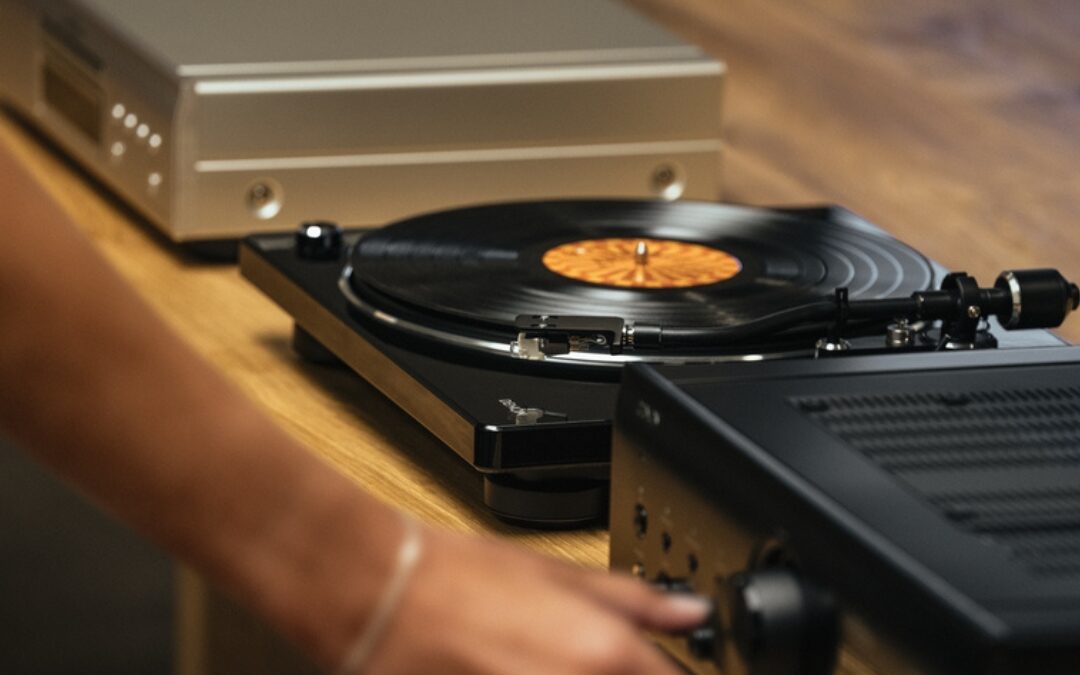
Turntable shopping has a reputation for being intimidating — cartridge alignment, tonearm balance, phono preamps, belt versus direct drive. For a lot of first-time buyers, that jargon is enough to talk themselves out of getting started at all. The Denon DP400 Hi-Fi Turntable was built specifically to remove that barrier, answering the real questions beginners actually have.
“Do I Need a Separate Phono Preamp?”
This is usually the first source of confusion, and it’s worth explaining properly. Turntables produce a signal that’s too weak and imbalanced to play through normal speakers or amplifiers without special processing first — that processing is handled by a phono preamp. Some turntables don’t include one, meaning you’d need a separate device and a receiver with a dedicated phono input to hear anything at all.
The DP400 solves this with a built-in, switchable phono preamp. In practice, that means you can connect it directly to almost any amplifier, mini system, or set of powered speakers — even ones without a dedicated phono input — and it will simply work. No extra components to research or budget for.
“Do I Need to Set Up the Cartridge Myself?”
The cartridge is the small component at the tip of the tonearm responsible for actually reading the groove, and getting its alignment wrong on a fully manual turntable can affect both sound quality and record wear. The DP400 removes this concern by arriving with an MM cartridge pre-mounted and correctly fitted to the S-shaped tonearm. There’s no calibration step between unboxing and playing your first record.
“Will This Damage My Records?”
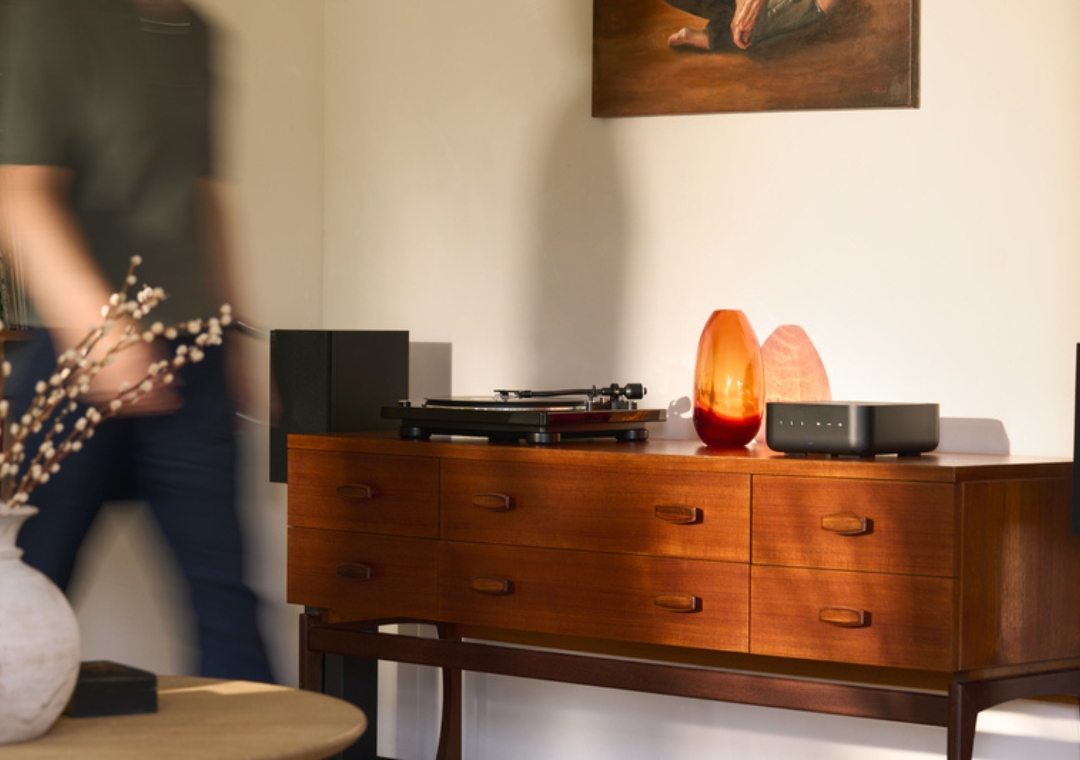
A common worry, particularly with vintage or valuable vinyl, is a needle sitting on a groove after a side finishes playing, unattended. The DP400’s tonearm addresses this directly with an auto-lift and playback stop function — once a side ends, the tonearm automatically lifts and returns to its resting position, rather than continuing to sit in the runout groove.
“What Speed Do I Actually Need?”
Most modern vinyl plays at 33⅓ RPM, but not all of it. Singles are commonly pressed at 45 RPM, and older or vintage records — the kind often inherited or found in secondhand collections — can be pressed at 78 RPM. The DP400 supports all three speeds, controlled through an integrated auto sensor that keeps rotation precisely consistent at whichever speed you’re using. This matters more than it might seem: inconsistent speed control is what causes the subtle pitch drift some cheaper turntables are known for.
“Belt-Drive or Direct-Drive — Does It Matter for a Beginner?”
You may come across this distinction while researching, so it’s worth a brief, honest answer. The DP400 uses a belt-drive system, in which the motor spins the platter indirectly via a belt, rather than a direct-drive setup where the motor sits beneath and spins the platter immediately. For most listening — casual to genuinely serious — belt-drive turntables like the DP400 perform excellently and are a completely appropriate starting point. Direct-drive systems, such as Denon’s flagship DP-3000NE, offer even tighter long-term speed consistency, but that level of precision matters most to critical, dedicated listeners rather than someone building their first collection.
Small Details That Add Up
Beyond solving the big beginner questions, the DP400 includes a few thoughtful touches: a weighted platter that helps maintain stable rotation, and a removable dust cover with an unusual dual purpose — rather than just protecting the turntable, it doubles as a small display stand for whatever album cover you’ve got spinning, adding a bit of personality to your setup rather than sitting somewhere out of sight.
From First Turntable to a Growing Collection
If your appreciation for vinyl grows over time, it’s worth knowing the DP400 isn’t necessarily where the journey has to end. Denon’s range extends up to genuinely flagship equipment like the DP-3000NE, built with direct-drive precision and dedicated vibration isolation for critical listening. Starting with the DP400 doesn’t lock you out of that path later — it simply means you’re not overcommitting before you know how much you’ll actually use it.
Quick Comparison: DP400 vs. DP-3000NE
| DP400 | DP-3000NE | |
| Drive Type | Belt-drive | Direct-drive |
| Cartridge | Pre-mounted, ready to use | Requires separate setup |
| Phono Preamp | Built-in, switchable | Not included |
| Best suited for | First-time buyers, casual to enthusiastic listeners | Serious, long-term vinyl collectors |
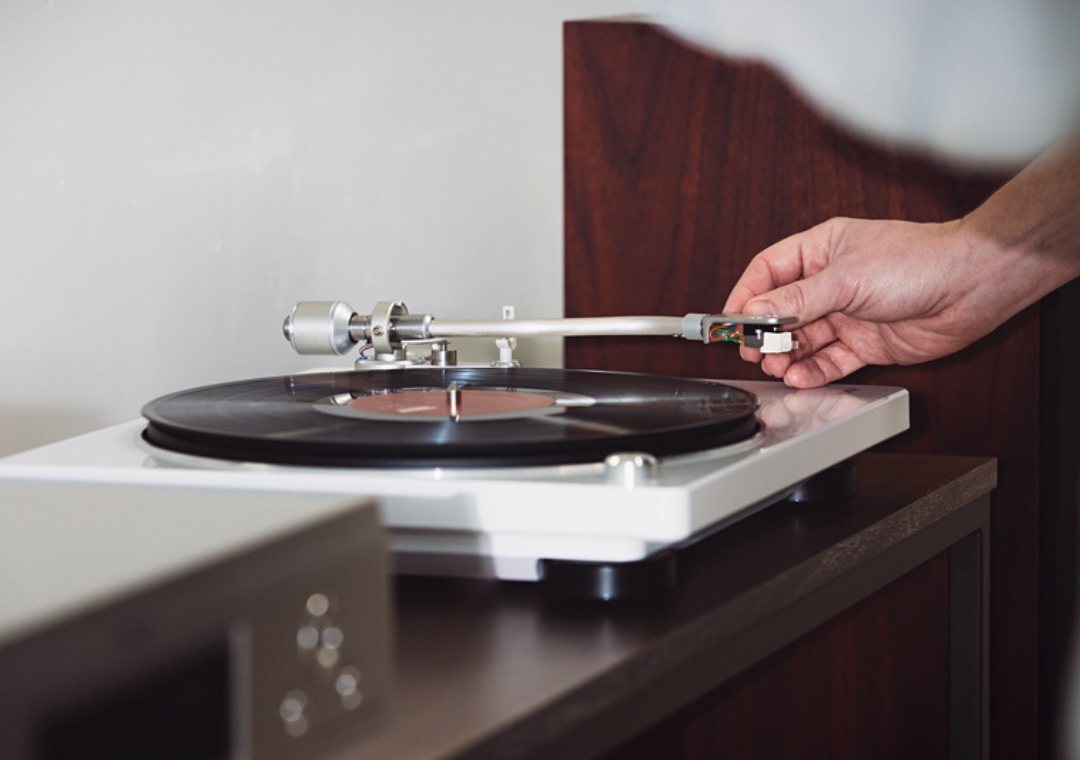
Who the Denon DP400 lifestyle Is Actually Built For
- Anyone buying their first turntable and wanting to avoid a steep technical learning curve
- Listeners who want to connect directly to existing equipment, without a dedicated phono input
- Buyers with a mixed record collection, including older 78 RPM pressings
- Vinyl newcomers who’d rather start simple and consider a serious upgrade later, once they know how much they’ll actually use it
Frequently Asked Questions
Can I use the DP400 with a soundbar or powered speakers instead of a full amplifier? Yes, thanks to its built-in switchable phono preamp, it can connect to most equipment lacking a dedicated phono input.
Do I need to buy a separate cartridge? No. The DP400 comes with an MM cartridge already mounted and correctly fitted, ready to use immediately.
Is it safe to leave a record playing unattended? Yes — the auto-lift and playback stop function raises the tonearm automatically once a side finishes.
Will this turntable play older records, not just modern vinyl? Yes, it supports 33⅓, 45, and 78 RPM, covering both modern pressings and older or vintage records.
Starting Simple, Without Starting Wrong
The DP400 isn’t a stripped-down or compromised turntable — it’s a genuinely well-engineered one that happens to remove the technical friction beginners usually run into first. For anyone ready to actually start playing records instead of researching how, that’s exactly the point.
Shop now – https://www.soundxshop.co.za/product/denon-dp400-hi-fi-turntable/